

The clinical trial landscape is rapidly evolving, and Electronic Clinical Outcome Assessment (eCOA) platforms are now at the center of this transformation. In 2026, sponsors and CROs are prioritizing patient-centric data collection, real-time insights, and regulatory compliance more than ever before.
With the rise of decentralized and hybrid clinical trials, eCOA solutions are no longer optional they are essential infrastructure. In fact, the global eCOA market is growing rapidly due to increasing trial complexity, demand for remote monitoring, and the need for accurate, real-time patient data.
In this blog, we explore the top eCOA platforms for clinical trials in 2026, key features to consider, and how to choose the right solution.
What is an eCOA Platform?
An eCOA platforms in clinical trials offers several key advantages that significantly enhance study outcomes. One of the primary benefits is higher data accuracy, as electronic data capture reduces manual errors and ensures more reliable patient-reported information. These platforms also improve patient compliance by making it easier for participants to record data through user-friendly digital interfaces and timely reminders. Additionally, eCOA solutions contribute to faster study timelines by streamlining data collection and minimizing delays associated with paper-based processes. Another major advantage is real-time monitoring, allowing sponsors and researchers to access up-to-date data instantly, identify issues early, and make quicker, informed decisions throughout the trial.
Why eCOA Platforms Matter in 2026
In 2026, eCOA platforms have become a critical component of modern clinical trials, driven by the growing demand for faster study startups, higher patient engagement, seamless remote participation, and audit-ready data. As clinical research continues to evolve toward more patient-centric and technology-driven models, eCOA solutions effectively address these challenges by enabling decentralized trial execution, supporting real-time data monitoring, improving patient retention rates, and ensuring higher data integrity. Additionally, with connected devices being used in an increasing number of trials, integration with eCOA platforms is no longer optional but a standard requirement for efficient and scalable clinical research operations.
How to Choose the Right eCOA Platform
Choosing the right eCOA platform depends largely on the specific requirements and scale of your clinical trial. For small to mid-size studies, it is often best to select flexible, fast-deployment solutions like ProCTTH, which enable quicker setup and efficient execution without unnecessary complexity. In contrast, large global trials typically benefit from enterprise-level platforms such as IQVIA or Medidata, which are designed to handle multi-region operations, regulatory requirements, and high data volumes. For trials involving complex endpoints or specialized data collection needs, platforms like Clario may be more suitable, offering advanced capabilities for precise and reliable data capture.
Top eCOA Platforms for Clinical Trials in 2026
-
1. ProCTTH eCOA Platform (Emerging Leader)
If you’re looking for a modern, patient-centric and scalable eCOA solution, ProCTTH is quickly emerging as a strong contender in 2026.
Why ProCTTH stands out:
Seamless integration with decentralized trials
Patient-first mobile app experience
Real-time alerts and engagement tools
Faster study setup and deployment
Scalable architecture for global trialsExplore more about ProCTTH: https://proctth.com/
ProCTTH is particularly valuable for sponsors seeking agility, customization, and faster execution without compromising compliance.
-
2. IQVIA eCOA
IQVIA offers one of the most established and widely adopted eCOA solutions in the industry.
Key features:
Up to 95% patient compliance rates
BYOD (Bring Your Own Device) support
Large validated assessment library
Real-time data monitoring and alertsIts ability to support global, large-scale trials makes it ideal for enterprise sponsors.
Learn more: https://www.iqvia.com/solutions/technologies/patient-engagement-suite/ecoa -
3. Medidata eCOA (Rave Clinical Cloud)
Medidata’s eCOA solution is part of its broader Clinical Cloud ecosystem, offering deep integration with EDC and trial management tools.
Highlights:
Unified platform approach
Strong regulatory compliance
Advanced analytics capabilities
Seamless data flow across systemsLearn more: https://www.medidata.com/en/clinical-trial-products/patient-centric-clinical-trials/ecoa-solution/
-
4. Clario Endpoint Platform
Clario focuses on endpoint data collection and patient engagement, especially in complex therapeutic areas.
Key strengths:
Advanced analytics for endpoints
Integration with imaging and cardiac data
Global trial supportLearn More: https://clario.com/
-
5. Kayentis Clin’form eCOA
A flexible and scalable platform suitable for diverse study designs.
Features include:
Multi-device compatibility (mobile, tablet, web)
Support for PRO, ClinRO, ObsRO
Scalable for global trials with thousands of participantsLearn More : https://kayentis.com/clinform-ecoa-solution/
Key Features to Look for in an eCOA Platform
Choosing the right eCOA platform is critical. Here are the top factors to consider:
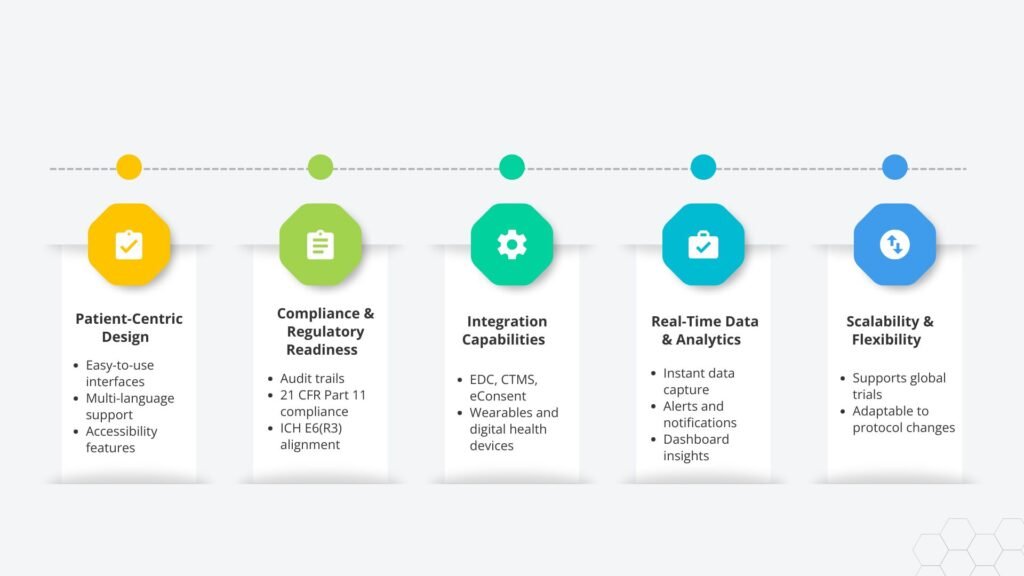
1. Patient-Centric Design
A strong eCOA platform should prioritize the patient experience by offering intuitive, easy-to-use interfaces that reduce the learning curve for participants. Features such as multi-language support ensure inclusivity across global populations, while accessibility options like larger fonts, voice guidance, or simplified navigation help accommodate patients with diverse needs. A patient-friendly design ultimately leads to higher engagement, better compliance, and improved data quality throughout the trial.
2. Compliance & Regulatory Readiness
Regulatory compliance is a non-negotiable aspect of any eCOA platform. The system must include robust audit trails to track every data entry and modification, ensuring transparency and accountability. Compliance with 21 CFR Part 11 and alignment with ICH E6(R3) guidelines are essential to meet global regulatory standards. These features help sponsors and CROs maintain data integrity and ensure that collected data is audit-ready at all times.
3. Integration Capabilities
Modern clinical trials rely on multiple digital systems, so seamless integration is key. An effective eCOA platform should easily connect with other eClinical systems such as EDC (Electronic Data Capture), CTMS (Clinical Trial Management Systems), and eConsent platforms. Additionally, the ability to integrate with wearables and digital health devices enables continuous data collection, enhancing both the depth and accuracy of patient data.
4. Real-Time Data & Analytics
Real-time data capture is a game-changer in clinical research. eCOA platforms should allow instant data entry and synchronization, enabling study teams to monitor patient progress as it happens. Built-in alerts and notifications help identify issues such as missed entries or protocol deviations early, while interactive dashboards provide actionable insights. This real-time visibility improves decision-making and enhances overall study efficiency.
5. Scalability & Flexibility
As clinical trials become more global and complex, scalability is essential. A reliable eCOA platform should support multi-site, multi-country studies without compromising performance. It should also be flexible enough to adapt to protocol amendments, varying study designs, and different therapeutic areas. This ensures that the platform remains effective and future-ready, regardless of how trial requirements evolve.
How to Choose the Right eCOA Platform
Choosing the right eCOA platform depends largely on the specific requirements and scale of your clinical trial. For small to mid-size studies, it is often best to select flexible, fast-deployment solutions like ProCTTH, which enable quicker setup and efficient execution without unnecessary complexity. In contrast, large global trials typically benefit from enterprise-level platforms such as IQVIA or Medidata, which are designed to handle multi-region operations, regulatory requirements, and high data volumes. For trials involving complex endpoints or specialized data collection needs, platforms like Clario may be more suitable, offering advanced capabilities for precise and reliable data capture.
Future Trends in eCOA (2026 and beyond)
The future of eCOA platforms in 2026 and beyond is being shaped by rapid advancements in digital health technologies and evolving clinical trial needs. One of the key drivers is AI-powered data validation, which enhances data accuracy by identifying inconsistencies and anomalies in real time. This not only reduces manual review efforts but also improves overall data quality and regulatory compliance.
Another major trend is the seamless integration of eCOA platforms with wearables and connected sensors. These integrations enable continuous data capture, offering richer, real-world insights into patient health and behavior. As a result, sponsors and CROs can make faster, more informed decisions while minimizing the burden on patients.
The expansion of decentralized clinical trials (DCTs) is also accelerating the adoption of eCOA solutions. With remote participation becoming more common, eCOA platforms play a critical role in enabling patients to report outcomes from the comfort of their homes. This shift improves accessibility, increases diversity in trial populations, and enhances patient retention.
In addition, real-time patient engagement tools are transforming how participants interact with clinical studies. Features such as reminders, notifications, and user-friendly interfaces help keep patients engaged and compliant throughout the trial lifecycle.
By 2026, eCOA has evolved far beyond a simple data collection tool. It has become a core pillar of digital clinical trials, supporting patient-centric approaches, improving data integrity, and driving more efficient and scalable research outcomes.
Conclusion
As clinical trials become more complex and patient-centric, choosing the right eCOA platform is critical for success.
Platforms like ProCTTH, alongside established leaders like IQVIA and Medidata, are shaping the future of clinical research by enabling:
- Faster trials
- Better patient engagement
- Higher-quality data
Organizations that invest in the right eCOA solution today will gain a significant competitive advantage in tomorrow’s clinical landscape.