

What are Decentralized Clinical Trials
-
Decentralized clinical trials (DCTs) represent an innovative approach to conducting clinical research, moving away from traditional, site-based methods. In this trial is designed to minimize the need for patients to visit centralized clinical sites, allowing for a more flexible and patient-centric experience. This approach leverages technology and remote methods to collect data, engage participants, and monitor their health status.
Benefits of Decentralized Clinical Trials
-
Increased Patient Access
Decentralized trials eliminate geographical barriers by allowing patients to participate from their homes or local healthcare facilities. This accessibility is particularly beneficial for individuals in remote or underserved areas, who may otherwise face difficulties traveling to central trial sites. By broadening the participant pool, these trials enhance the inclusivity of clinical research.
-
Enhanced Patient Engagement
Utilizing mobile technology, telemedicine, and wearables fosters ongoing communication between researchers and participants. This continuous engagement not only keeps patients motivated but also helps address any questions or concerns they may have throughout the study. Improved communication leads to higher retention rates and a more committed participant base.
-
Improved Data Collection
Decentralized trials leverage electronic data capture (EDC) systems and remote monitoring tools, allowing for real-time data collection. This approach enhances the accuracy and completeness of data, minimizing the risk of human error often associated with traditional methods. Automated systems streamline data management processes, leading to more reliable results.
-
Faster Recruitment and Enrollment
By employing digital marketing strategies and utilizing social media platforms, decentralized trials can reach a larger audience more quickly than traditional recruitment methods. This ability to connect with potential participants rapidly accelerates the enrollment process, allowing studies to meet their recruitment targets more efficiently.
-
Cost Efficiency
Conducting trials remotely can result in significant cost savings. With reduced overhead costs from fewer physical site requirements and lower patient travel expenses, sponsors can allocate their resources more effectively. Additionally, enhanced patient retention and streamlined processes contribute to overall savings throughout the trial lifecycle.
-
Flexible Trial Design
Decentralized trials enable researchers to implement adaptive protocols that can respond dynamically to real-time data. This flexibility allows for modifications in the study design as needed, ensuring the research remains relevant and efficient while accommodating the unique needs of participants.
-
Regulatory Acceptance
Regulatory bodies are increasingly recognizing the value of decentralized trials, providing guidance and frameworks for their implementation. As regulations evolve, this acceptance enhances the credibility and legitimacy of decentralized methodologies, encouraging their broader adoption within the clinical research community.
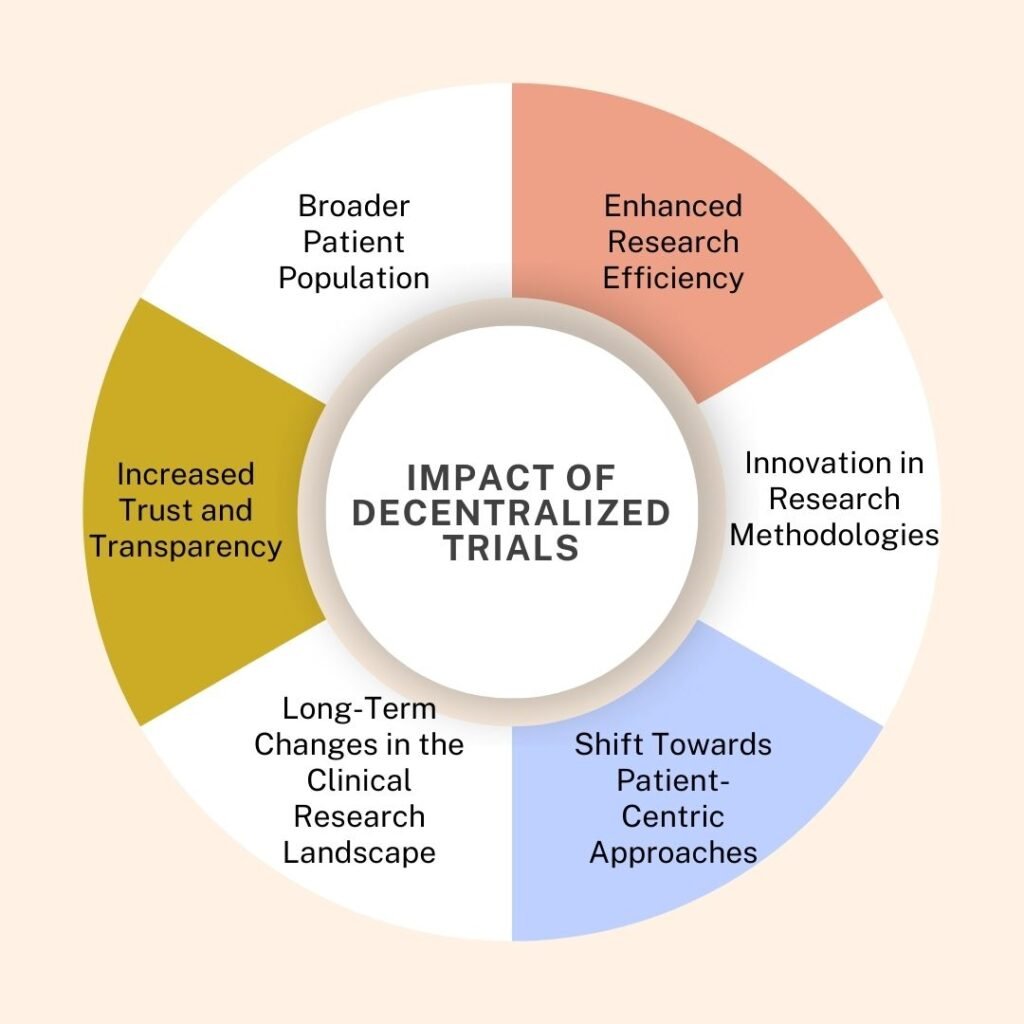
Impact of Decentralized Clinical Trials
-
Broader Patient Population
The increased accessibility of decentralized trials contributes to a more diverse patient population. This diversity is essential for improving the generalizability of study results, as it ensures that findings are applicable to a wider range of demographics and health conditions, ultimately benefiting public health.
-
Enhanced Research Efficiency
With improved patient retention and faster recruitment, decentralized trials can lead to more timely completion of studies. This efficiency accelerates the pace of research and drug development, facilitating quicker access to new therapies for patients in need.
-
Innovation in Research Methodologies
The success of decentralized trials encourages the exploration and adoption of innovative research methods and technologies. By demonstrating the viability of remote trial designs, these studies are likely to inspire new approaches in clinical research that further enhance data collection, patient engagement, and overall study efficacy.
-
Shift Towards Patient-Centric Approaches
Decentralized trials inherently promote a more patient-centric focus in clinical research. By placing patients at the center of the research process and accommodating their needs and preferences, these trials align with evolving expectations for transparency, involvement, and responsiveness in healthcare.
-
Long-Term Changes in the Clinical Research Landscape
As decentralized trials become more accepted, they are poised to drive fundamental changes in the way clinical research is conducted. This shift may influence policies, practices, and stakeholder engagement, leading to a more adaptive and innovative research environment.
-
Increased Trust and Transparency
By involving patients more directly and transparently in the research process, decentralized trials can foster greater trust in clinical research outcomes and methodologies. This trust is crucial for encouraging participation in future studies and enhancing the overall reputation of clinical research.
Key Technologies Powering Decentralized Clinical Trials
Decentralized clinical trials (DCTs) utilize key technologies to enhance efficiency and participant engagement. Telemedicine enables remote consultations, while wearable devices collect real-time health data. Mobile health (mHealth) apps facilitate symptom tracking and medication adherence. Electronic data capture (EDC) streamlines digital data management, and blockchain ensures data integrity. Artificial intelligence (AI) analyzes large datasets to optimize trial designs, and remote patient monitoring (RPM) allows for real-time health tracking. Cloud computing provides secure data storage and sharing, and digital recruitment tools expand participant reach through online channels. These technologies make DCTs more accessible and efficient, ultimately improving healthcare solutions.
Mobile Applications: Enhancing Decentralized Clinical Trials
Mobile applications are transforming decentralized clinical trials by improving participant engagement, streamlining data collection, and enhancing overall trial efficiency. These apps provide easy access to trial information, which aids in recruiting and retaining participants through timely notifications and educational resources. By allowing participants to report their health status and side effects directly through the app, real-time data collection is enabled, facilitating timely monitoring and improving safety.
Furthermore, mobile applications enhance compliance and retention by offering personalized reminders and tracking features that foster accountability among participants. Gamification elements, such as rewards for completing tasks, can further boost engagement. Data security is also a priority, with robust encryption and secure authentication measures ensuring that participants’ sensitive information is protected, thereby fostering trust in the trial process.
Additionally, the integration of mobile apps with wearable devices and telehealth platforms allows for continuous health monitoring, minimizing the need for in-person visits. The data collected can be analyzed to identify trends and improve study protocols, facilitating data-driven decisions. Moreover, mobile applications enable access to a diverse participant pool, enhancing the generalizability of study findings. In summary, mobile applications play a key role in enhancing decentralized clinical trials, driving innovation, and improving patient outcomes.
Future Trends in Patient-centric Clinical Research
As healthcare continues to evolve, patient-centric clinical trials is becoming increasingly vital, particularly in the realm of decentralized clinical trials (DCTs). These trials prioritize the needs and preferences of patients, ensuring that research is not only scientifically robust but also relevant and accessible. Here are some key future trends in patient-centric clinical research within the context of decentralized trials:
-
Enhanced Use of Technology
The integration of advanced technologies such as artificial intelligence (AI), telemedicine, and wearable devices is set to transform decentralized clinical trials. These tools facilitate real-time data collection, remote monitoring, and increased patient engagement, allowing for a more personalized and efficient research process. Patients can participate from their homes, reducing barriers to entry and improving retention rates.
-
Personalized Patient Engagement
Future trials will likely employ tailored communication strategies that resonate with individual patients. This includes personalized educational materials, reminders, and support through digital platforms. Engaging patients throughout the trial process fosters trust and improves adherence, leading to more meaningful outcomes.
-
Emphasis on Diversity and Inclusion
There is a growing recognition of the importance of diversity in clinical research. Future trends will likely focus on recruiting a more representative patient population, ensuring that trials reflect the demographics of the broader community. Strategies may include targeted outreach efforts, cultural sensitivity training for researchers, and adaptive trial designs that accommodate diverse patient needs.
-
Decentralized Data Management
With the shift toward decentralized trials, managing data effectively becomes critical. Future trends may see the rise of secure, cloud-based platforms that allow for seamless data sharing and collaboration among stakeholders. Such systems can facilitate real-time access to patient data, enhance transparency, and streamline regulatory compliance.
-
Regulatory Evolution
As decentralized clinical trials become more commonplace, regulatory frameworks are expected to adapt accordingly. Regulatory bodies may implement new guidelines that support the unique aspects of DCTs, such as remote patient monitoring and digital data collection. This evolution will help ensure patient safety while fostering innovation in trial design.
-
Focus on Patient-Cantered Outcomes
Future patient-centric research will increasingly emphasize outcomes that matter most to patients. This shift may involve the development of new metrics that capture quality of life, symptom management, and patient satisfaction. By prioritizing these outcomes, researchers can ensure that the results of clinical trials are relevant and beneficial to patients.
-
Collaborative Partnerships
The future of patient-centric clinical research will likely see greater collaboration among stakeholders, including patients, healthcare providers, research institutions, and pharmaceutical companies. By working together, these entities can co-create trial designs that align with patient needs, streamline processes, and enhance the overall research experience.
-
Continuous Feedback Mechanisms
Incorporating continuous feedback loops into the clinical trial process will become more prevalent. Patients will have opportunities to provide real-time feedback on their experiences, which can inform trial adjustments and enhance patient satisfaction. This iterative approach can lead to more effective and responsive trial designs.
Conclusion
In conclusion, decentralized clinical trials (DCTs) are revolutionizing clinical research by prioritizing patient-centric approaches that enhance accessibility, engagement, and data collection. By utilizing technologies like telemedicine and mobile applications, DCTs enable participants to engage from their homes, leading to broader diversity and improved research efficiency.
Looking ahead, the focus on personalized engagement, adaptive trial designs, and continuous feedback will further refine the trial experience. As regulatory frameworks evolve to support DCTs, their credibility and adoption will increase. This shift marks a significant advancement in research methodology, fostering trust and transparency while ultimately improving patient outcomes and public health.